
Gallery
Below is a sample of my work. Some are items I have sold, others are experiments in my ever developing love of carving. If any stand out, I am happy to discuss making a custom order based on what you like, but due to the organic nature of the work, no two pieces will ever look exactly the same. In a world of mass produced products, I see this as a feature, not a bug!
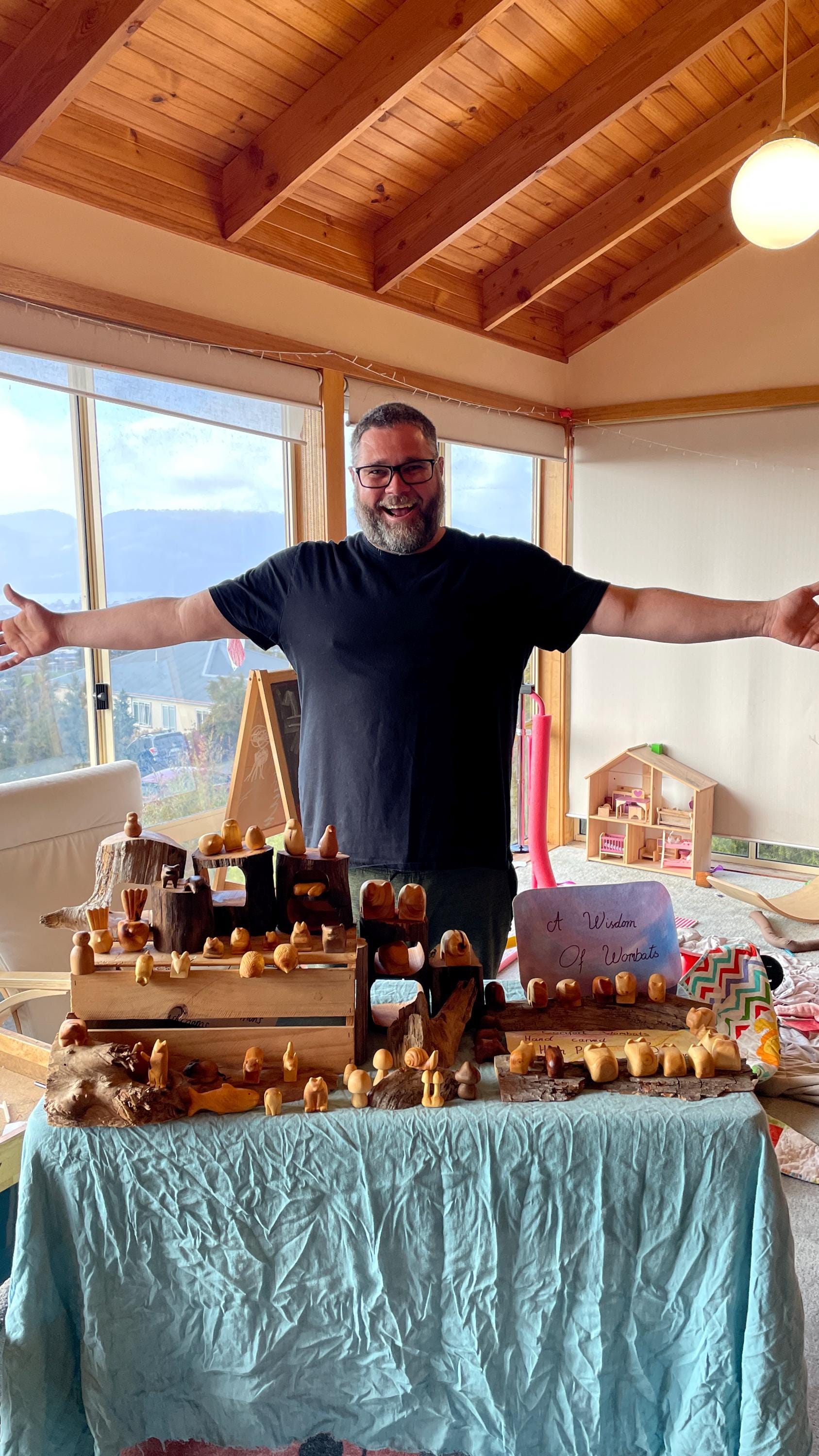
My proud moment of first setting up a display in preparation for my first market.
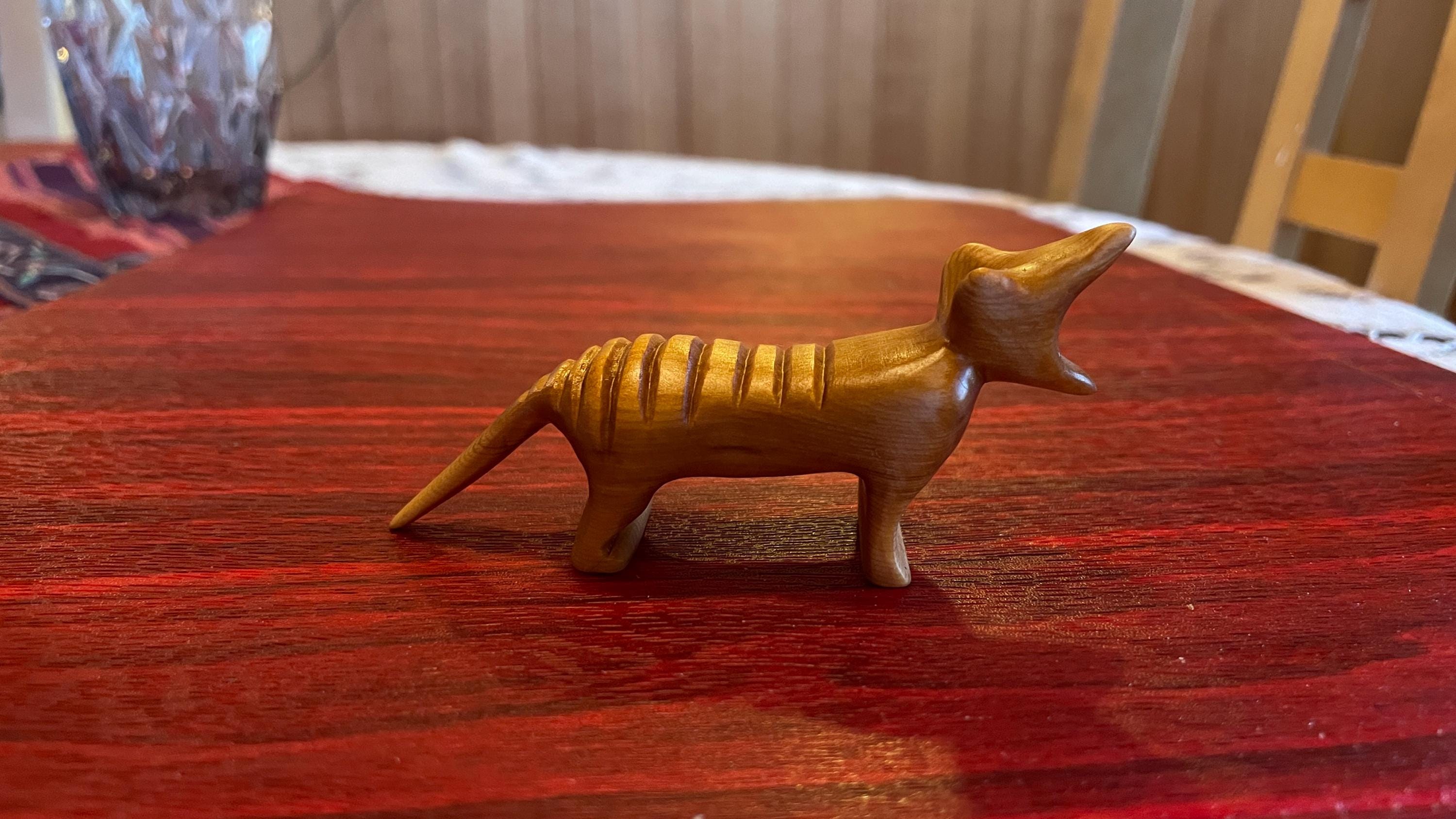
My first attempt at a thylacine. I do not paint or burn my carvings, so I decided to carve the stripes into the back and use the negative space to show the black stripes on the tiger.
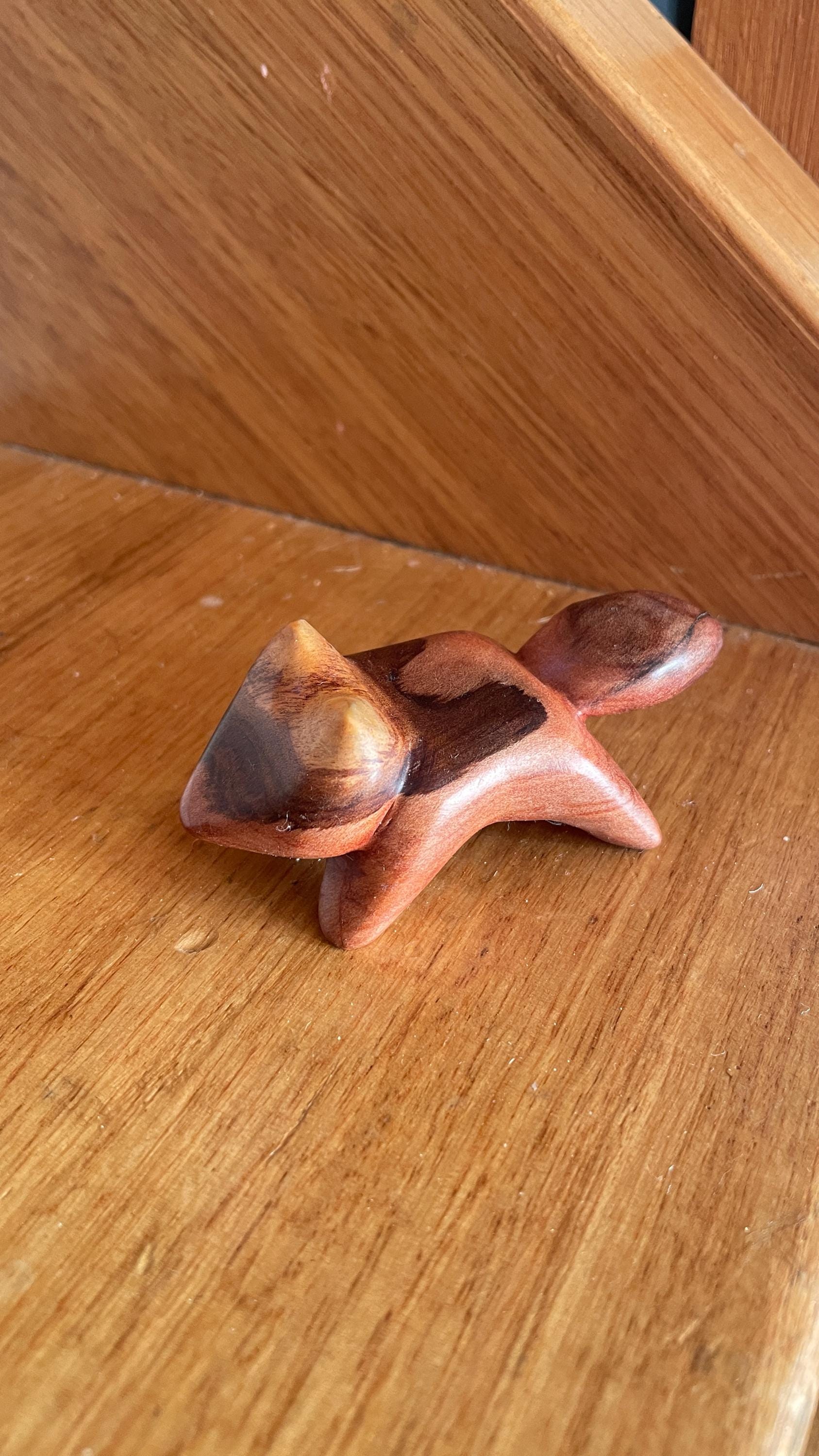
A fox carved for a friend who was going away. The wood is Californian Redwood salvaged from a diseased tree that was cut down in someone's back yard. This piece was from the outer edge of the rotting wood. The unique colouring is a result of what killed the tree and it was a pleasure to take a piece of wood that would usually have been thrown away or burned, and turn it into something new.
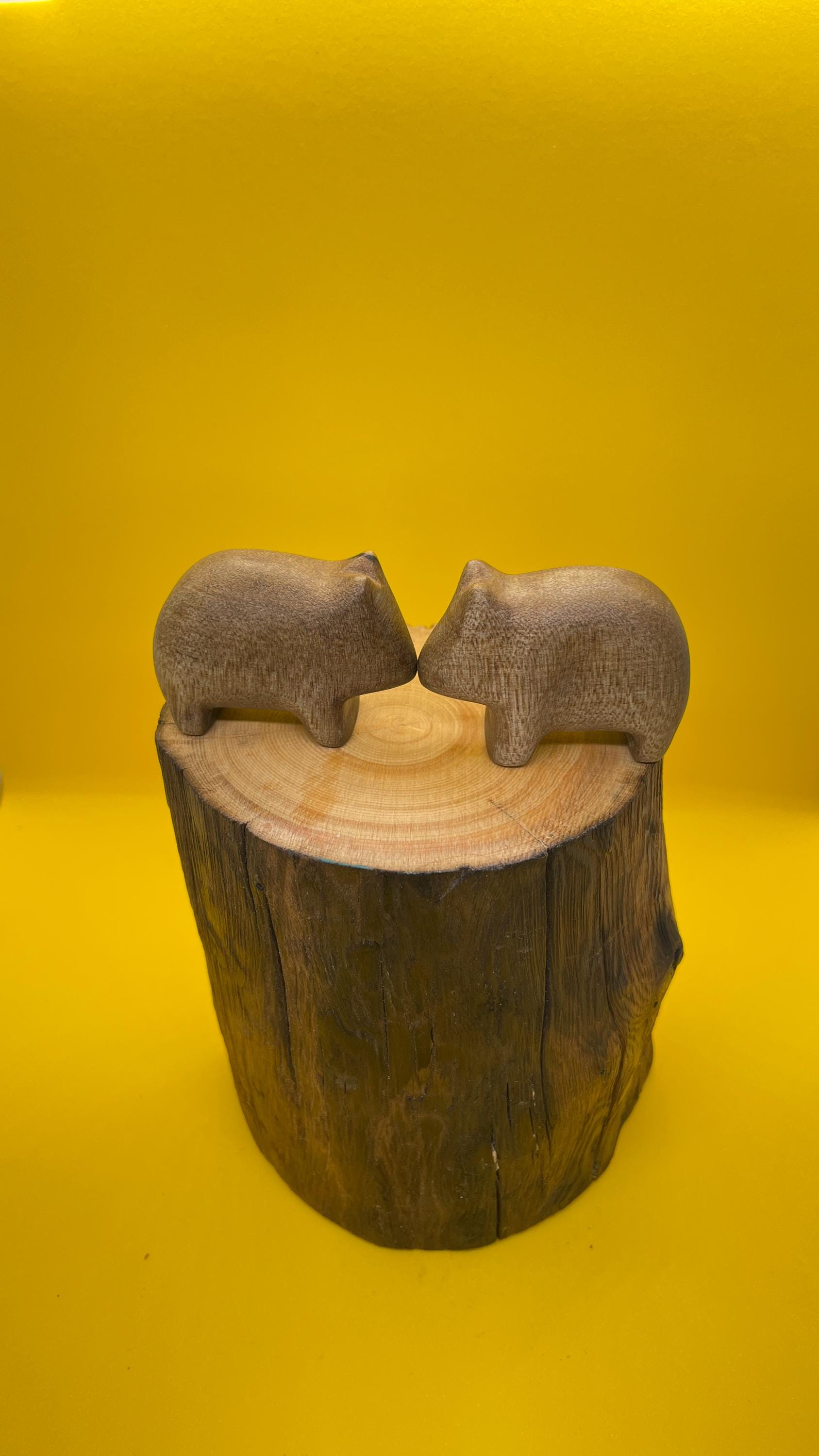
A pair or blackheart Sassafras wombats carved from the same piece of timber
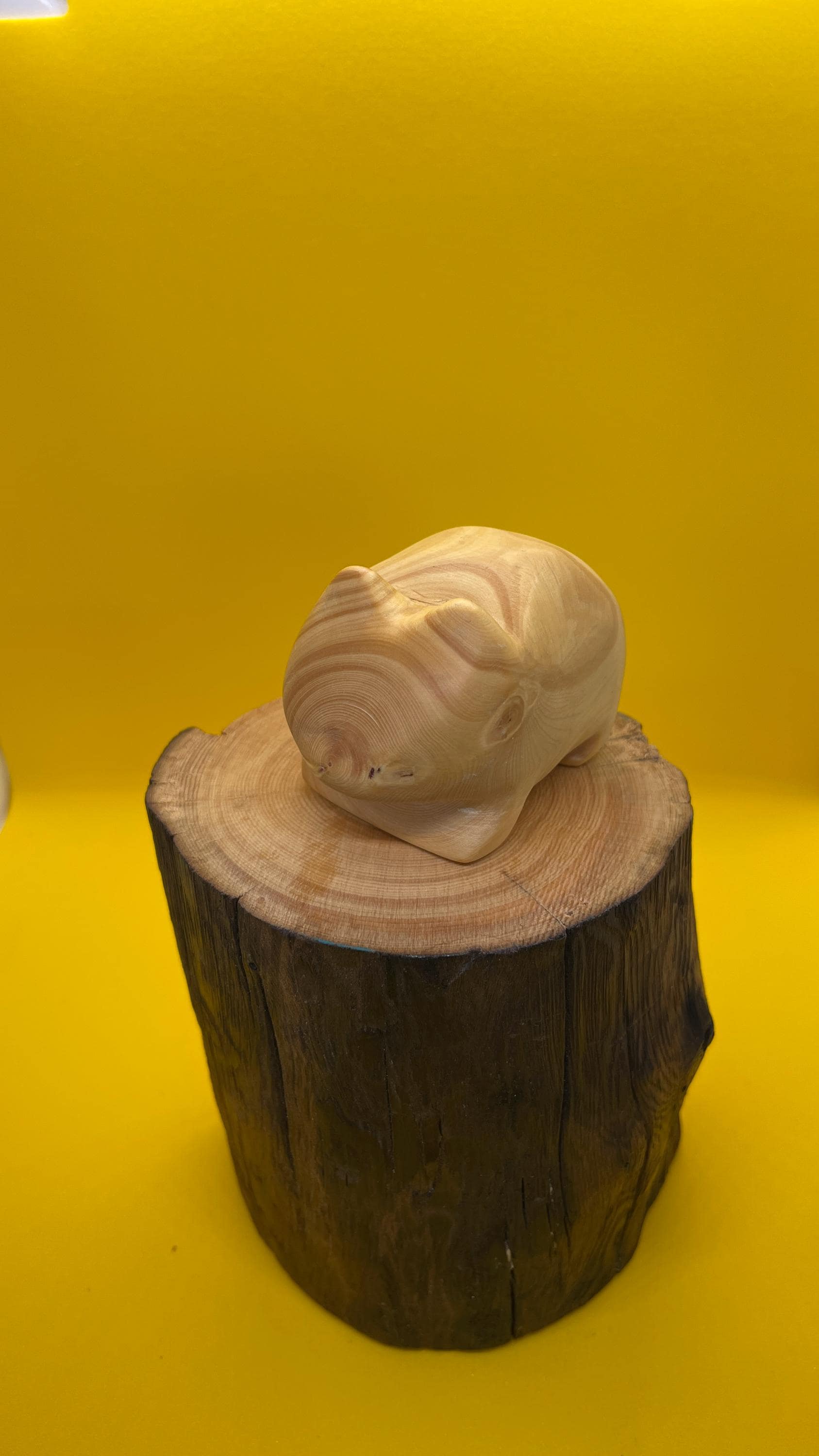
An example of a wombat made from Huon Pine limb wood. The features of the wood give the wombat unique character that makes each one a one-of-a-kind creation.
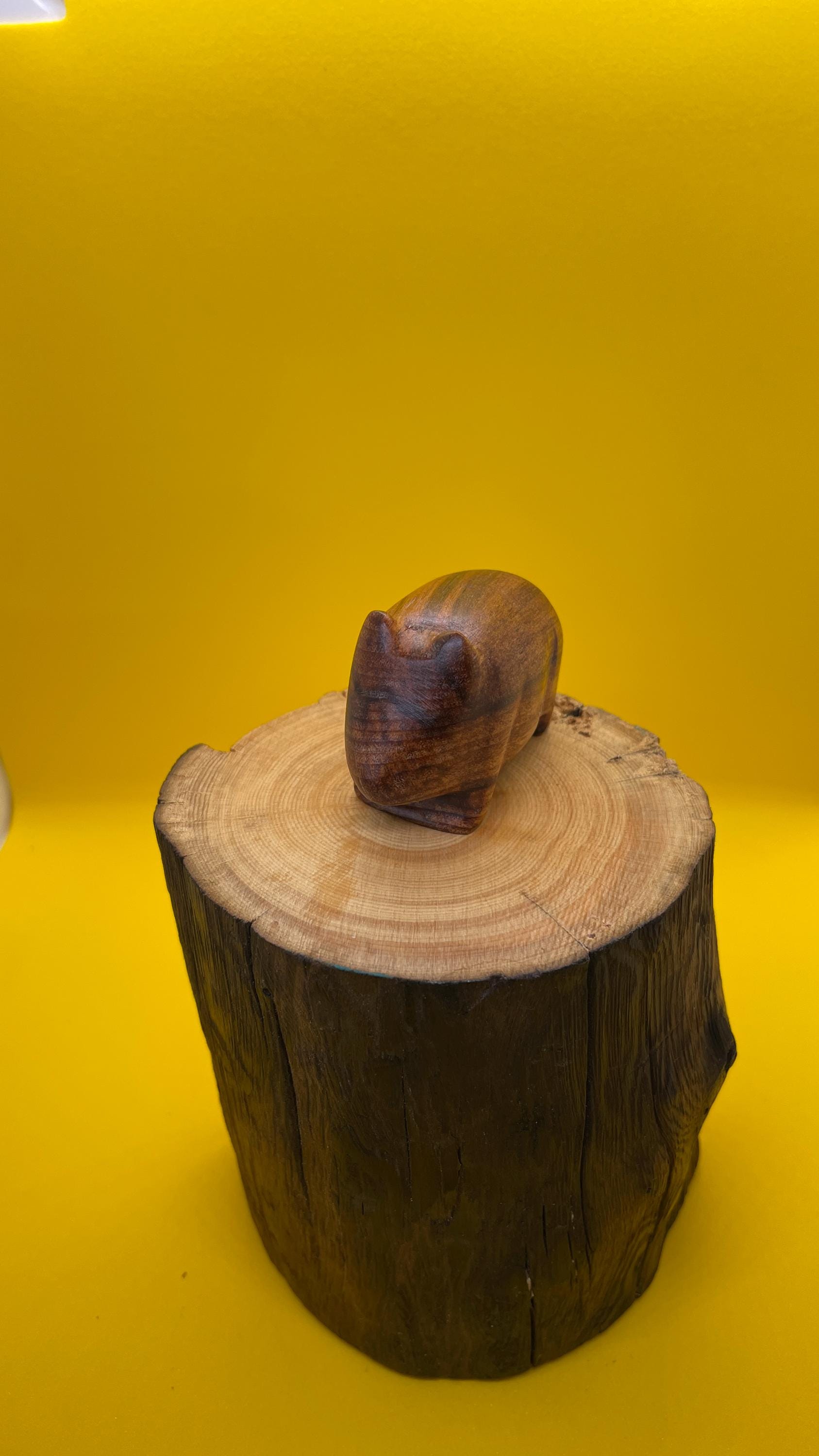
A wombat carved from leatherwood. Leatherwood is a locally growing wood here in Tasmanian, and a very hard wood to work by hand but the end result is worth it
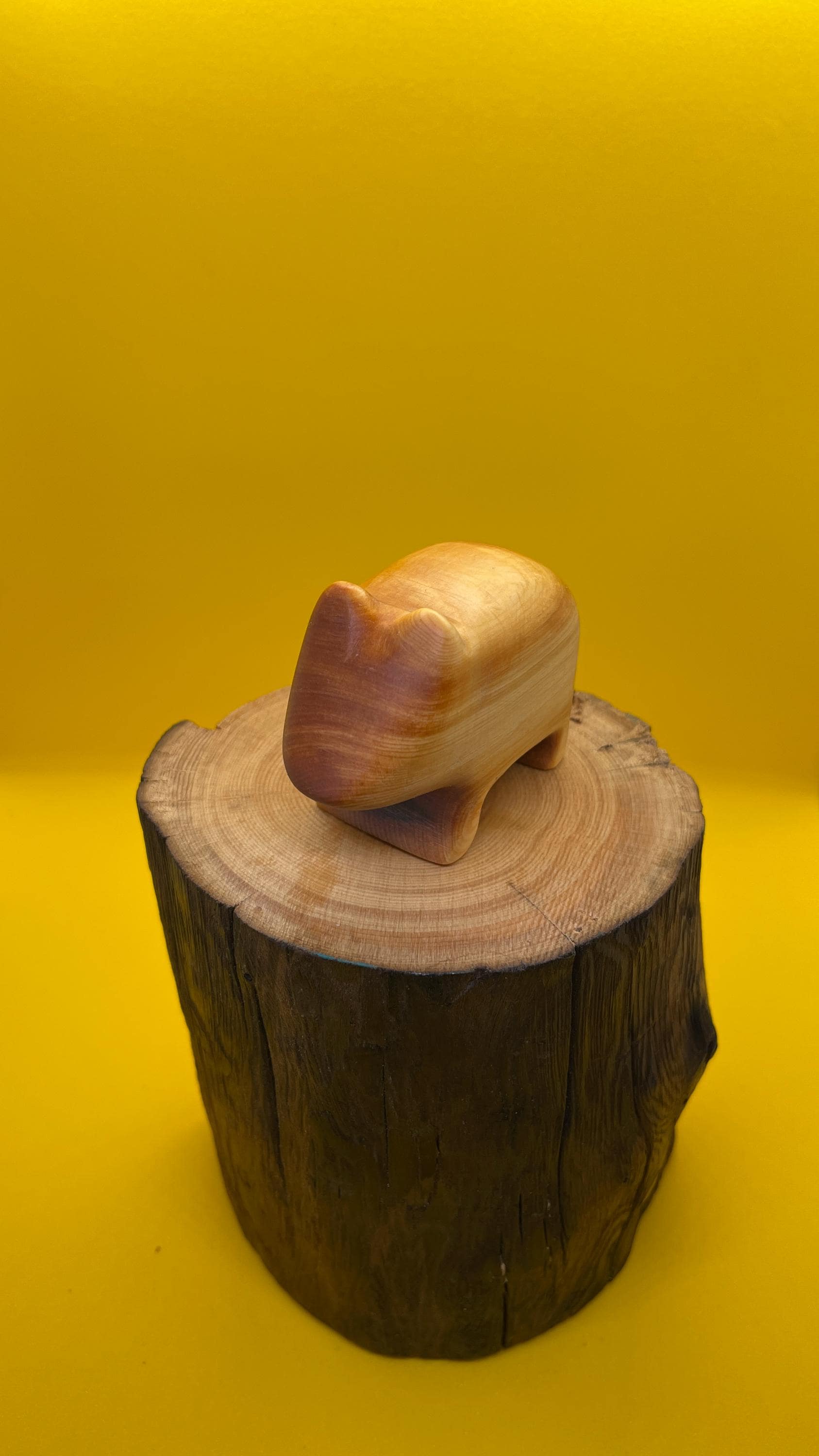
An example of a Huon Pine wombat. Huon Pine is the wood I carve the most and its softness and smell are wonderful.
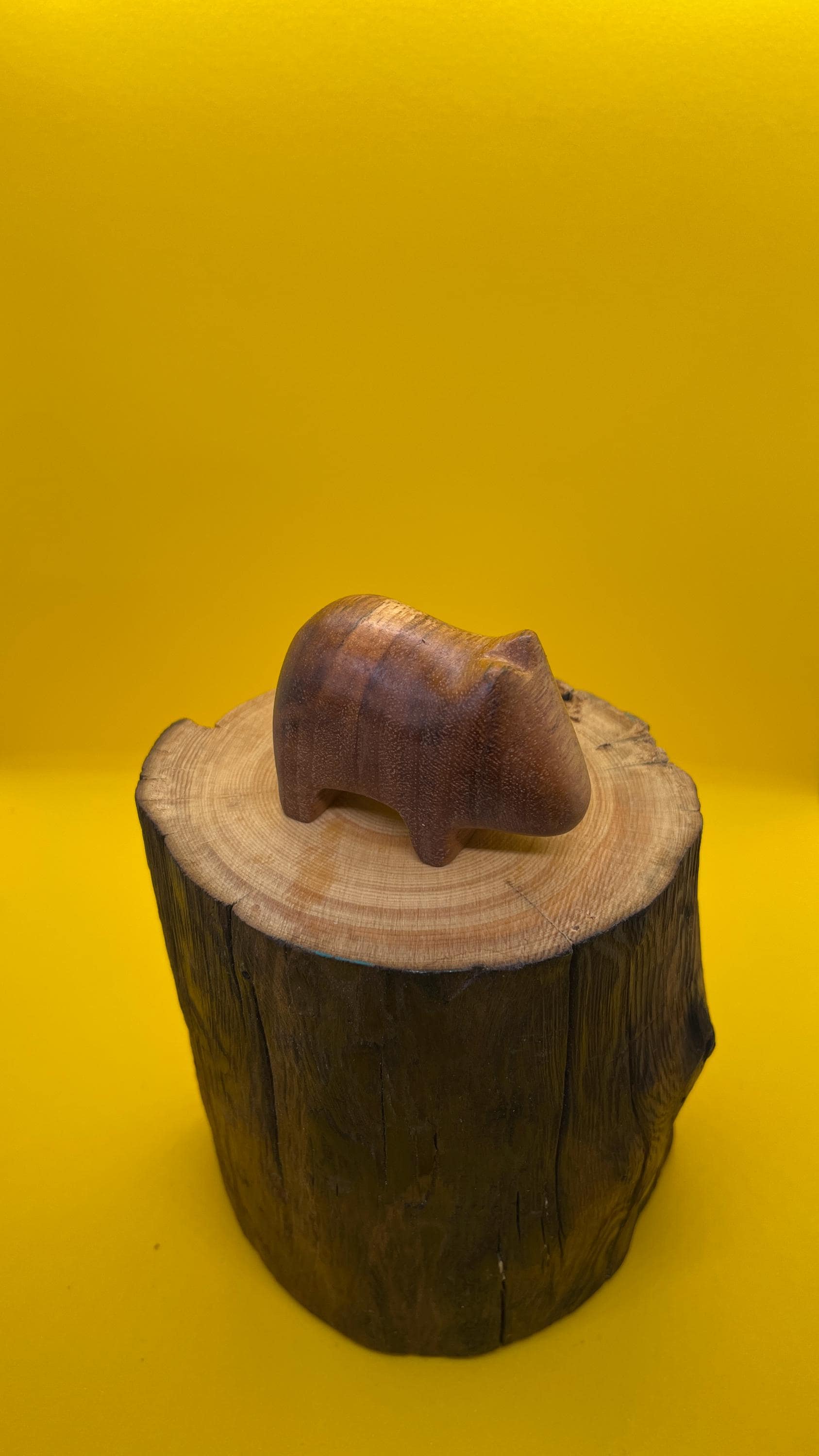
A walnut wombat made from wood salvaged from a school woodwork shop
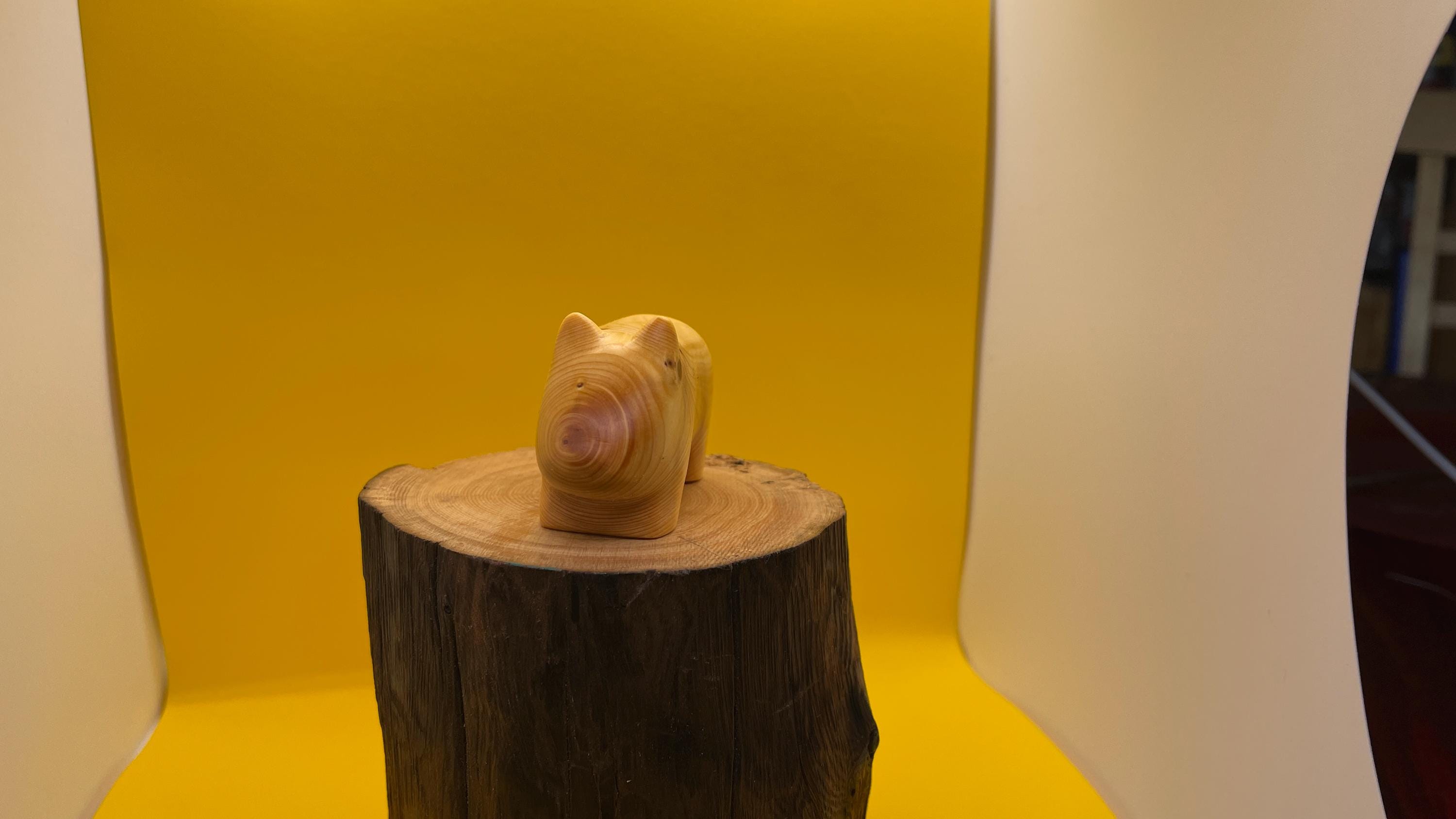
A Huon Pine wombat. Many of my Huon wombats are made from the limb wood, or the branches of the tree. I prefer this wood because it is firmer, so it holds details better. The limb wood also tends to have unique features that the wood from the trunk of the tree doesn't and gives the animals lots of character.
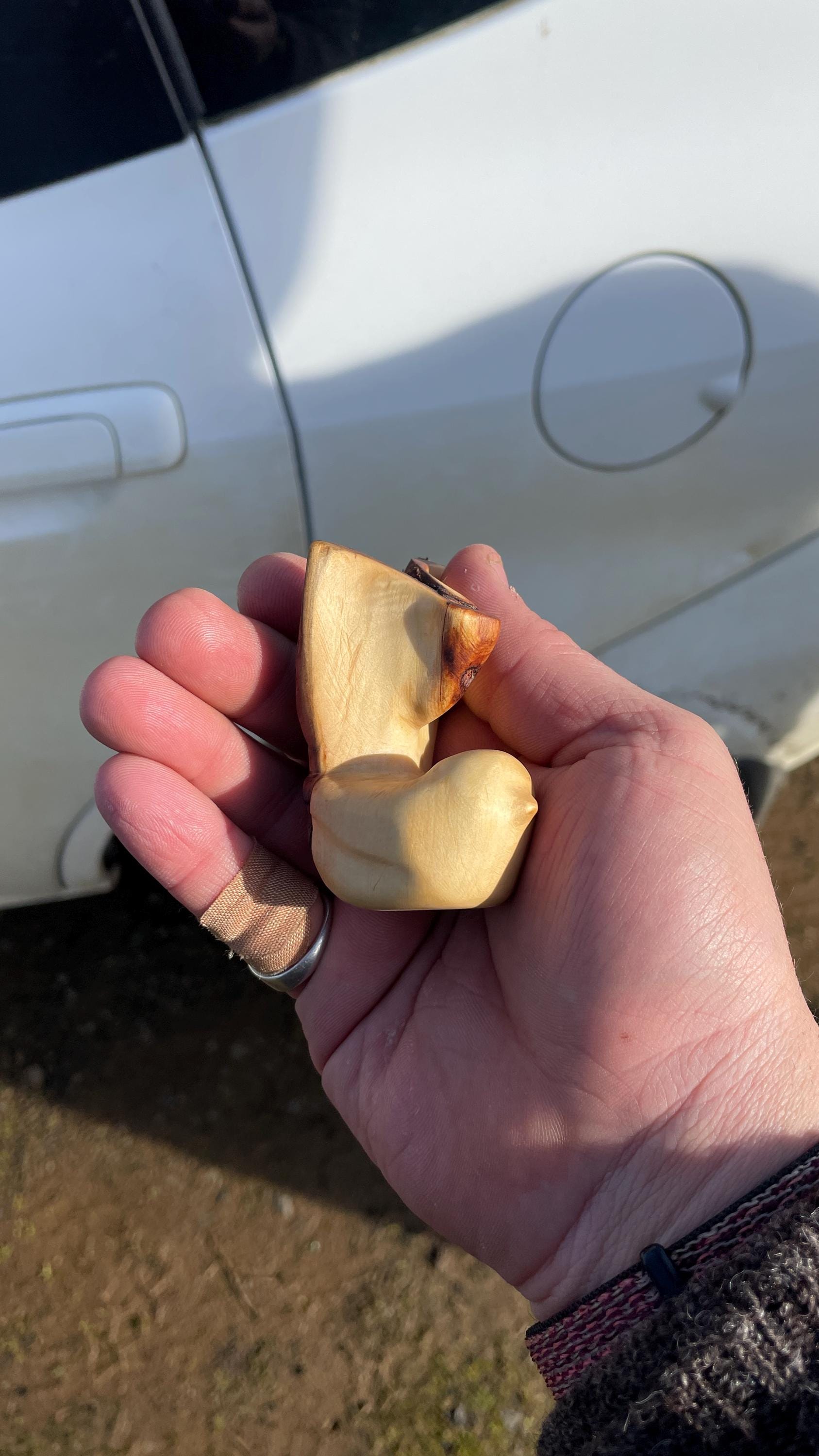
Sometimes I find a piece of scrap wood that has beautiful feature I want to preserve, but an odd shape that is hard to find a fit for. In this case the bark of the tree formed a unique pattern that looked to me like the tail of a wren. It took some time but I am happy with the result.
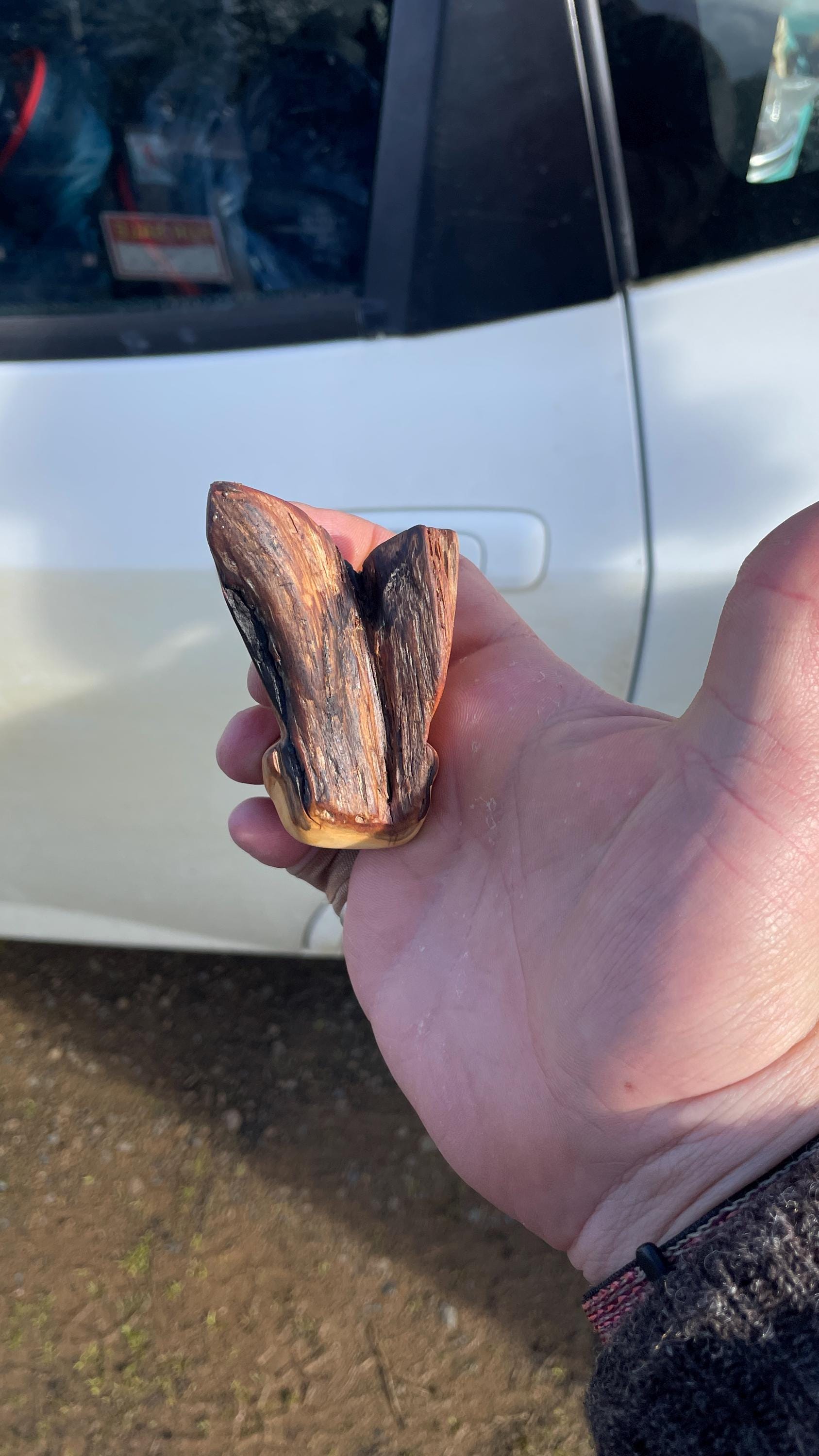
The bark/back side of the wren. Pieces like this are hard for me to put a price on. Not everyone is after a bird that only looks like a bird when I tell them it is one. Often these types of creations might be ones I keep for my own pleasure or trade with another woodworker for something of theirs.
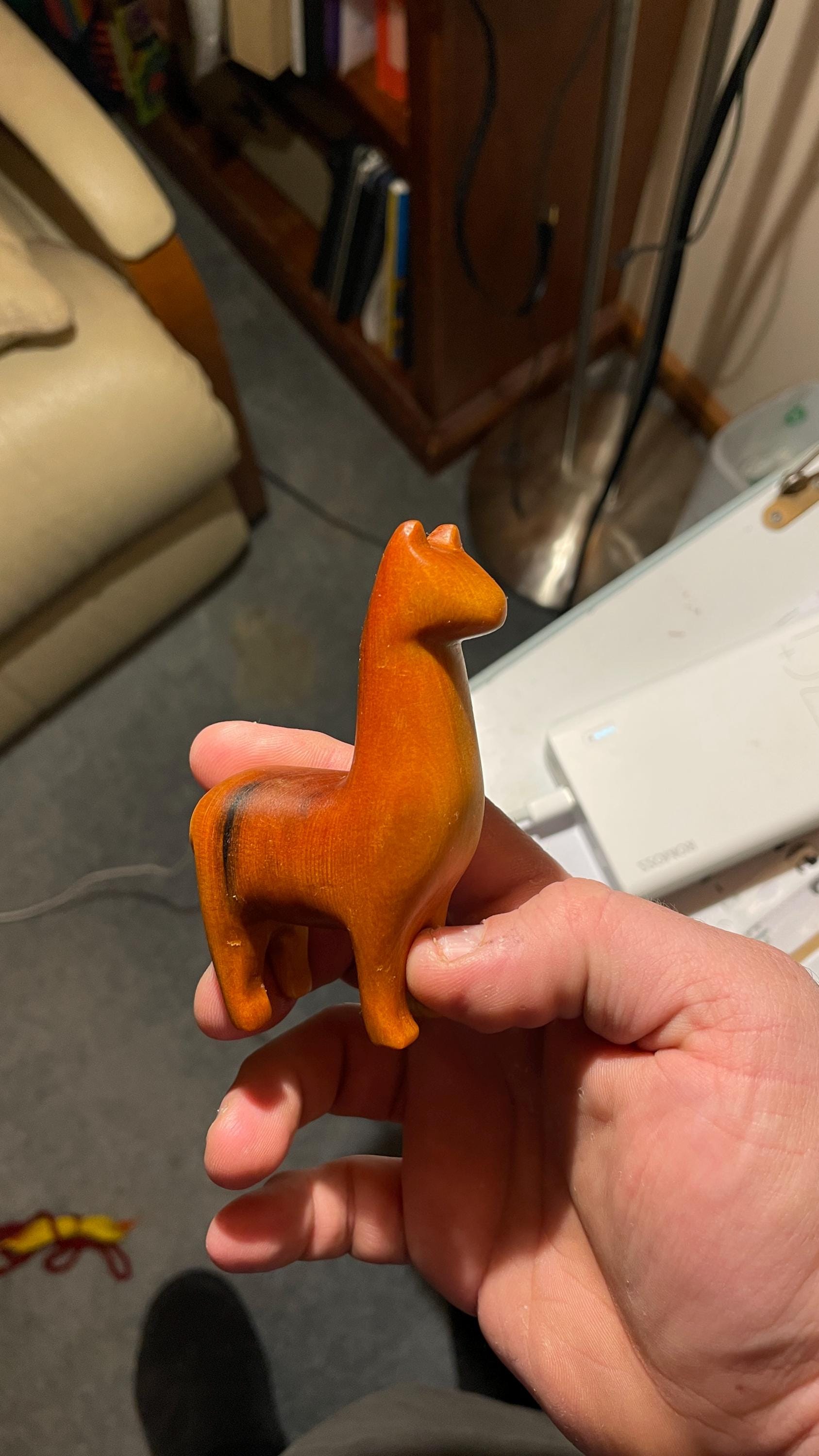
I enjoy the challenge of carving a new creature. I recently met a man who kept alpacas and took the chance to study them and take some photos. This is my first attempt at getting their shape "right" in the wood.
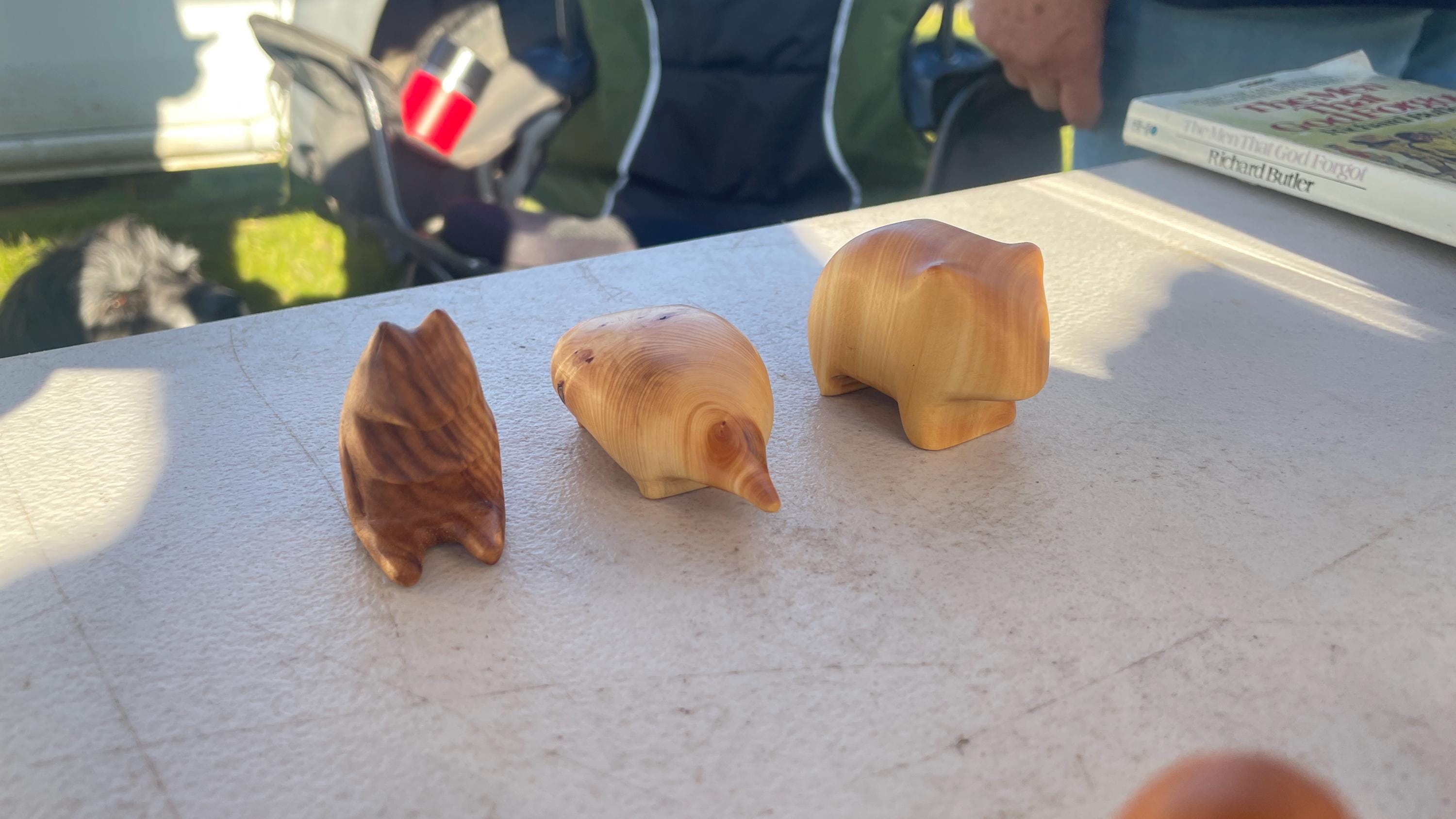
The wallaby was carved from the wood of the Daisy Musk, a locally growing wood that is often hard to get a hold of but is probably my favourite Tasmanian wood to make animals from due to it's unique colour and shine.
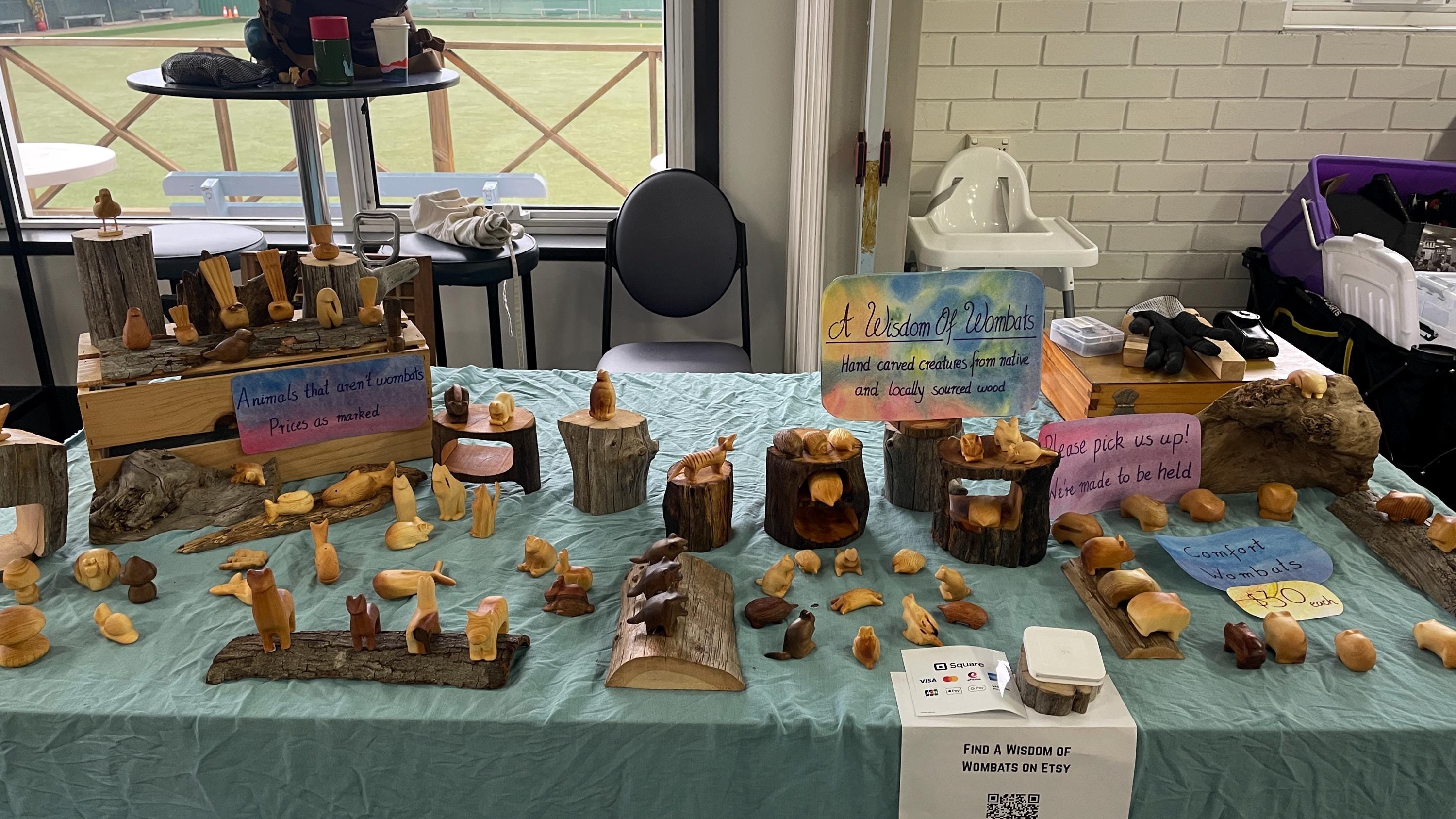
An example of my market stall. I enjoy setting up the displays in a way that uses the raw wood the animals are made from. It is also fun for me to set up the animals and I often describe it as "playing with my toys" as I set up scenarios between the animals. In this scenario the wombats and echidnas are giving a platypus a talking to.
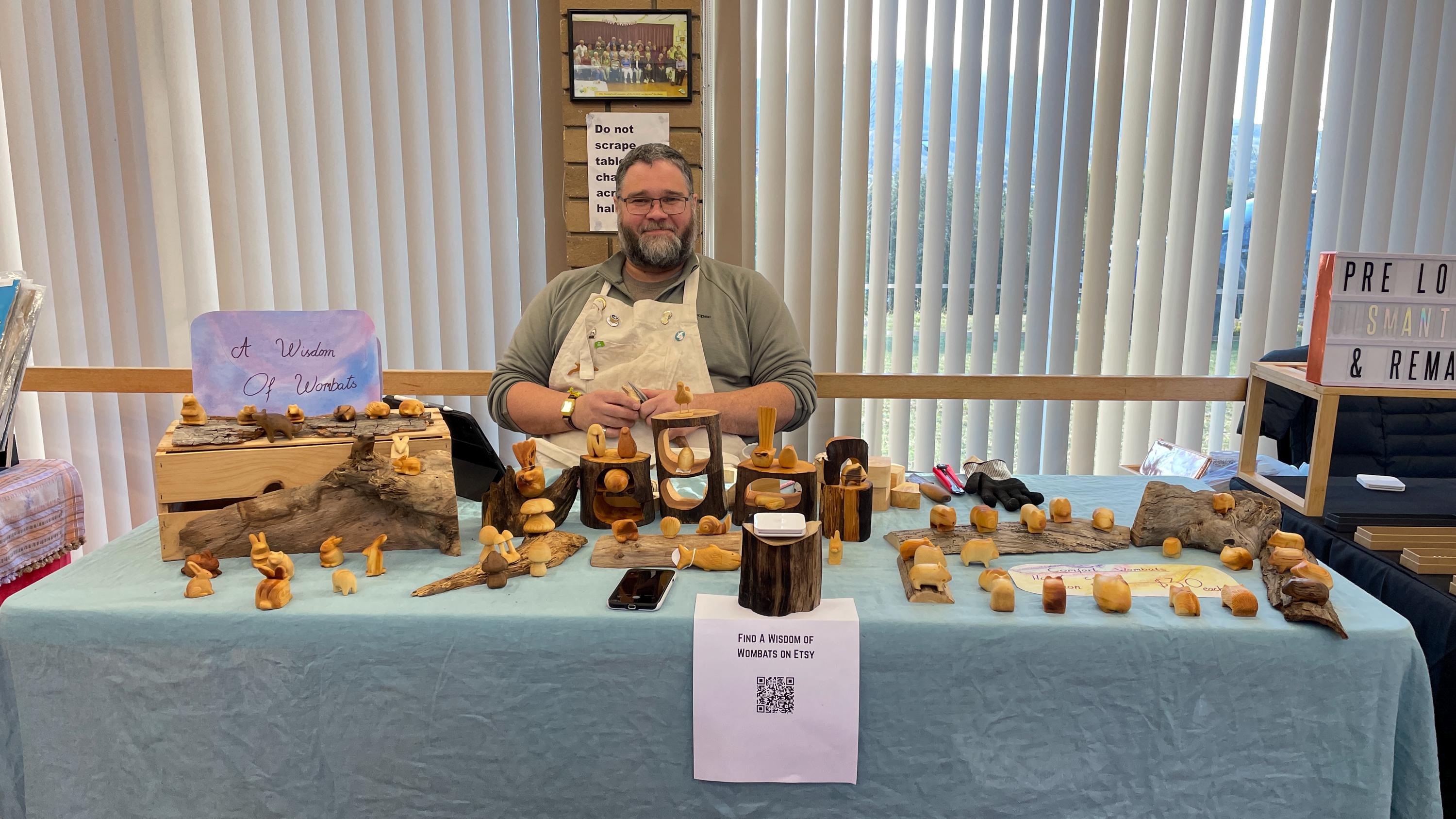
An advantage of this craft is that it is very portable. I enjoy carving and working on the animals while I man the stall. I hope it gives people a chance to see what the process looks like and appreciate the smell of freshly cut Huon Pine
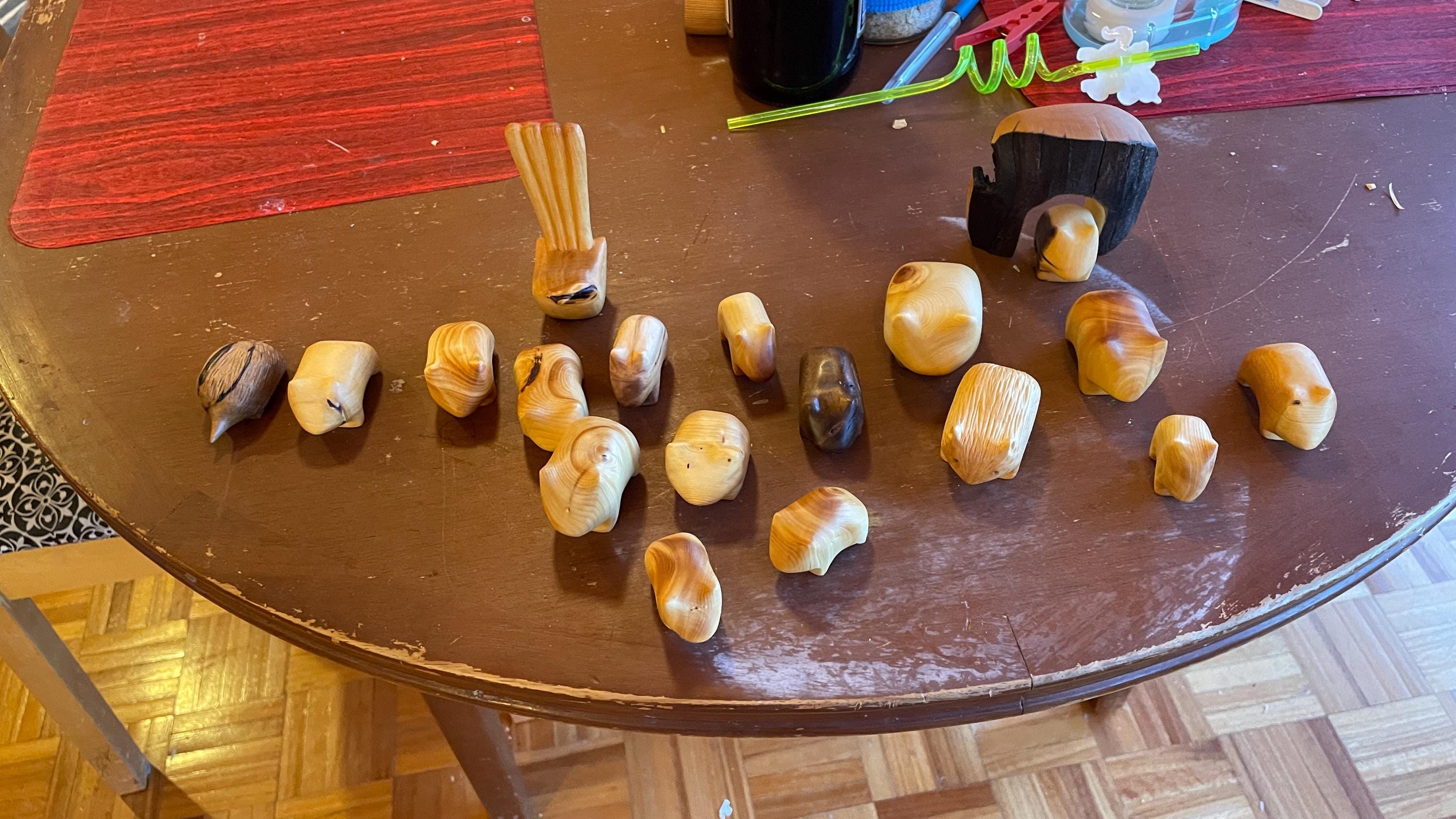
A recently finished batch animals made from various woods.